The Transparency Dividend: Why Radical Openness About Data Is Becoming Tech's Most Valuable Asset
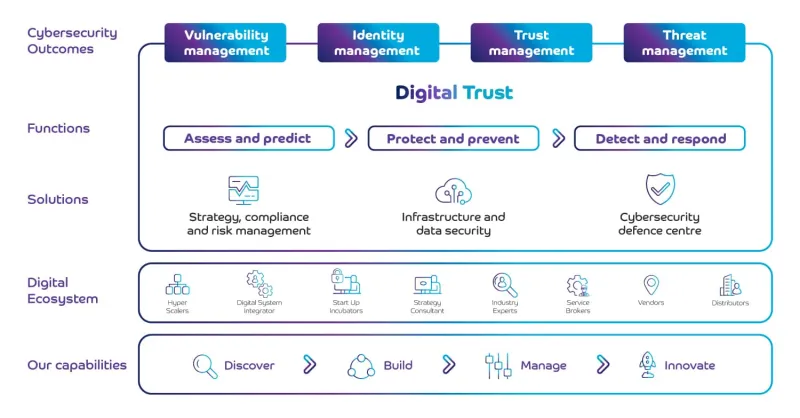
Photo: data transparency algorithm trust digital ethics technology platform, via www.du.ae
For most of the past two decades, the dominant posture of technology companies toward their data practices was strategic ambiguity. Privacy policies ran to thousands of words precisely because clarity was not the objective. Algorithmic systems were described in terms of outcomes rather than mechanisms. Infrastructure decisions were treated as proprietary advantages, not subjects for public disclosure.
That posture is under pressure. And the pressure is not coming only from regulators.
A measurable shift is occurring among a specific segment of the technology market—primarily business-to-business platforms and developer-focused tools, but increasingly in consumer applications as well—toward what might be called radical transparency: the deliberate, proactive disclosure of data handling practices, algorithmic logic, and backend infrastructure as a primary competitive strategy.
The Trust Deficit Driving the Shift
To understand why this movement is gaining traction now, it is necessary to understand the environment it is responding to. Surveys conducted across the United States over the past three years consistently show that trust in technology platforms has declined across virtually every demographic segment. The causes are well-documented: high-profile data breaches, congressional hearings that surfaced the opacity of social media recommendation systems, and a growing popular understanding that algorithmic outputs are not neutral.
For enterprise buyers—the procurement officers, CTOs, and legal teams that make purchasing decisions for organizational software—this skepticism has become institutionalized. Vendor due diligence processes now routinely include questions about data residency, model training practices, and audit trails that would have been considered unusual requests five years ago.
Platforms that can answer these questions clearly, and that have built their products to make answering them easy, are encountering a procurement environment that rewards their preparation.
What Radical Transparency Actually Looks Like
The term encompasses a range of practices that vary significantly in their depth and credibility. At the surface level, it includes improved privacy documentation—plain-language summaries, interactive data dashboards, and consent architectures that give users meaningful choices rather than the illusion of them.
At a more substantive level, it involves open-source publication of core infrastructure components, detailed model cards for AI systems that describe training data composition and known limitations, and third-party audits whose results are published regardless of their findings.
Hugging Face, the machine learning platform with significant adoption across American research institutions and enterprise AI teams, has built much of its market position on exactly this kind of openness. Its model hub includes standardized documentation that describes not just what a model does, but what biases its training data may have introduced and what use cases the developers consider inappropriate. This information is not buried in terms of service; it is the primary interface through which researchers evaluate whether a model is suitable for their purposes.
The competitive effect is tangible. In a market where AI vendors frequently oversell capability and underspecify risk, the platform that documents its limitations with precision becomes, paradoxically, the more trustworthy choice.
The Algorithmic Accountability Dimension
For platforms deploying AI-driven decision-making—credit assessment tools, hiring software, content moderation systems, medical diagnostic aids—the transparency imperative carries additional weight, and additional regulatory complexity.
Several US jurisdictions have passed or are actively considering algorithmic accountability legislation that would require disclosure of how automated systems make consequential decisions. New York City's Local Law 144, which mandates bias audits for automated employment decision tools, represents an early instance of this regulatory direction becoming enforceable policy.
Platforms that have proactively built explainability into their systems—not as a compliance feature added after the fact, but as an architectural choice made during development—are finding that the investment yields returns beyond regulatory preparedness. Users who can interrogate why a system produced a particular output are more likely to trust subsequent outputs, and more likely to provide the corrective feedback that improves model performance over time.
This creates a feedback loop that is difficult for less transparent competitors to replicate quickly. Transparency, in this context, is not merely a values statement. It is a data advantage.
The Scaling Problem
The most significant challenge facing the transparency movement is the question of whether its commitments can survive growth. The historical pattern is discouraging. Companies that built early reputations on openness—in social media, in search, in cloud infrastructure—have repeatedly found that the practices enabling transparency at small scale become operationally costly or strategically inconvenient at large scale.
The pressures are predictable. Investor expectations around proprietary advantage create incentives to restrict access to model architectures and training methodologies. Competitive intelligence concerns lead legal teams to narrow the scope of public disclosures. Security considerations—some legitimate, some pretextual—provide cover for reducing infrastructure transparency.
Startups currently competing on transparency credentials should be evaluated, in part, on the governance structures they have built to resist these pressures. Platforms that have embedded transparency commitments into their organizational charters, established independent oversight boards, or structured their open-source contributions under licenses that limit proprietary forking are making credible signals. Those whose transparency is purely policy-based—subject to revision by executive decision—are making weaker ones.
A New Competitive Grammar
What the transparency movement suggests, at a broader level, is that the competitive grammar of the technology industry is changing. The previous grammar was built around scale, network effects, and data accumulation as sources of durable advantage. The emerging grammar adds a different kind of asset: institutional credibility.
In an environment where users and enterprise buyers have become sophisticated enough to distinguish between genuine openness and its performative imitation, the platforms that invest in building verifiable trust—not just communicating it—are positioning themselves for a durable form of differentiation.
This is not idealism dressed up as strategy. It is a recognition that in markets defined by information asymmetry, the party that voluntarily reduces that asymmetry in credible, verifiable ways earns a form of loyalty that marketing cannot manufacture.
The algorithm age has produced justified skepticism. The platforms that learn to answer that skepticism honestly, rather than manage it rhetorically, are discovering that honesty, at scale, has a compounding return.