The Quiet Engine: How the Best Platforms Succeed by Disappearing
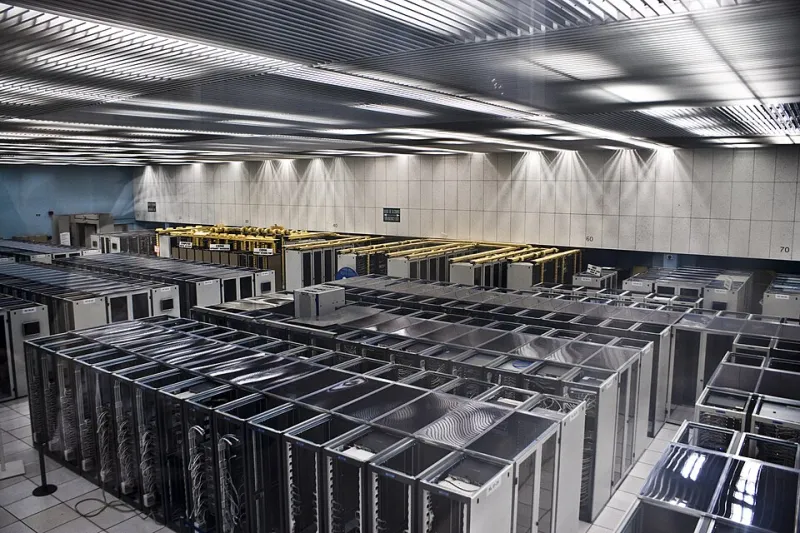
Photo: Florian Hirzinger - www.fh-ap.com, CC BY-SA 3.0, via Wikimedia Commons
There is a particular kind of ambition in Silicon Valley that gets almost no press coverage. It does not announce product launches on social media. It does not court venture capital journalists or cultivate founder mythology. It simply works — reliably, relentlessly, and without ceremony. The platforms that embody this philosophy have, in many cases, become more deeply embedded in global digital infrastructure than any consumer app that ever trended on social media.
This is the paradox of invisible infrastructure: the less you notice it, the better it is doing its job.
The Psychology of Seamlessness
Human attention is drawn to friction. When a system fails, users notice. When it succeeds, they move on. This asymmetry is not a bug in human cognition — it is a feature that the best platform engineers have learned to exploit deliberately. A payment processing layer that completes transactions in under 200 milliseconds does not generate applause. It generates trust, which is far more durable.
Psychologists refer to this phenomenon as "the absence of awareness" — the state in which a tool becomes so integrated into behavior that its use feels less like a decision and more like breathing. The platforms that achieve this state have effectively removed themselves from the user's conscious decision-making process. They are no longer evaluated; they are simply relied upon.
For technology companies operating in this space, the strategic implication is significant. User loyalty built on seamlessness is stickier than loyalty built on novelty. When a platform becomes part of the invisible scaffolding of someone's workflow, switching costs are not merely financial — they are cognitive and operational.
Case Studies in Strategic Obscurity
Consider the category of cloud database providers and API infrastructure companies that power hundreds of thousands of applications without most end users ever encountering their brand names. These platforms — often described internally by their clients as "boring" — process billions of requests daily. Their sales cycles are long, their marketing budgets modest, and their customer retention rates extraordinary.
The logic is straightforward: when your product is infrastructure, your audience is not the end consumer. It is the developer, the operations team, the CTO who signs the renewal contract. These audiences do not respond to viral campaigns. They respond to uptime statistics, documentation quality, and the accumulated evidence of dependability over time.
This is a fundamentally different growth model than the one celebrated in most startup narratives. There are no growth hacks here. There is only the slow, compounding accumulation of trust — earned one successful deployment at a time.
Why 'Boring' Is a Competitive Moat
The term "boring infrastructure" has become something of a badge of honor in certain engineering communities, and for good reason. Platforms that prioritize operational consistency over feature velocity tend to develop moats that are genuinely difficult to replicate. Their competitive advantage is not a clever algorithm or a proprietary dataset — it is institutional knowledge, battle-tested reliability, and the network effects of deep integration.
When a major e-commerce platform embeds a payments API into its checkout flow, that integration does not get revisited casually. Ripping it out means developer hours, QA cycles, and operational risk. The switching cost compounds with every passing quarter. The invisible platform becomes, paradoxically, one of the most defensible positions in the market.
This dynamic also reshapes how these companies think about product development. Rather than chasing feature parity with competitors, the best invisible platforms invest disproportionately in reliability engineering, observability tooling, and developer experience. The goal is not to impress — it is to eliminate every possible reason a customer might consider leaving.
The Branding Contradiction
There is an interesting tension embedded in this model. A platform that succeeds by staying invisible still needs to be discovered in the first place. The marketing challenge for infrastructure companies is therefore not amplification but precision: reaching the right technical decision-makers without diluting the signal with consumer noise.
This has given rise to a distinct genre of B2B content strategy — deeply technical documentation, conference sponsorships at developer-focused events, and open-source contributions that build credibility within engineering communities. The brand is built not through advertising but through demonstrated competence, visible in code repositories, incident post-mortems, and the quiet endorsements of engineers who have staked their own reputations on a platform's reliability.
For companies navigating this space, the lesson is that invisibility to end users does not mean invisibility to buyers. The channels are simply narrower, the criteria more technical, and the relationships more durable.
What the Spotlight Actually Costs
It is worth asking what platforms sacrifice when they pursue visibility over reliability. The answer, often, is operational focus. Companies that orient themselves around public perception tend to make product decisions in response to external narratives rather than internal data. Features get shipped to generate press coverage. Roadmaps get reshaped around competitive announcements. Engineering resources get diverted toward demos rather than distributed systems improvements.
The invisible infrastructure model imposes a kind of discipline that is difficult to maintain but enormously valuable. When your only audience is the engineer who will evaluate your API at two in the morning during a production incident, you cannot afford to be mediocre. Every abstraction has to hold. Every edge case has to be documented. The platform has to be worthy of trust in the moments that matter most.
In an era when technology products are increasingly evaluated on their ability to generate attention, there is something quietly radical about building for the opposite. The most powerful platforms in the digital economy are often the ones you have never thought to name — because you have never had a reason to notice them failing.
That, in the end, is the highest form of engineering ambition.